A field guide to film & television
Find the words.
Shape the scene.
A shared vocabulary for the stories we tell and the choices that bring them to life. Explore the craft, one idea at a time.
643 terms • 22 chapters • One connected craft
Visual field notes · 01
One subject. Twelve ways to light it.
Compare the lighting pilot’s illustrated candidates, from key light to silhouette.
Explore the lighting study →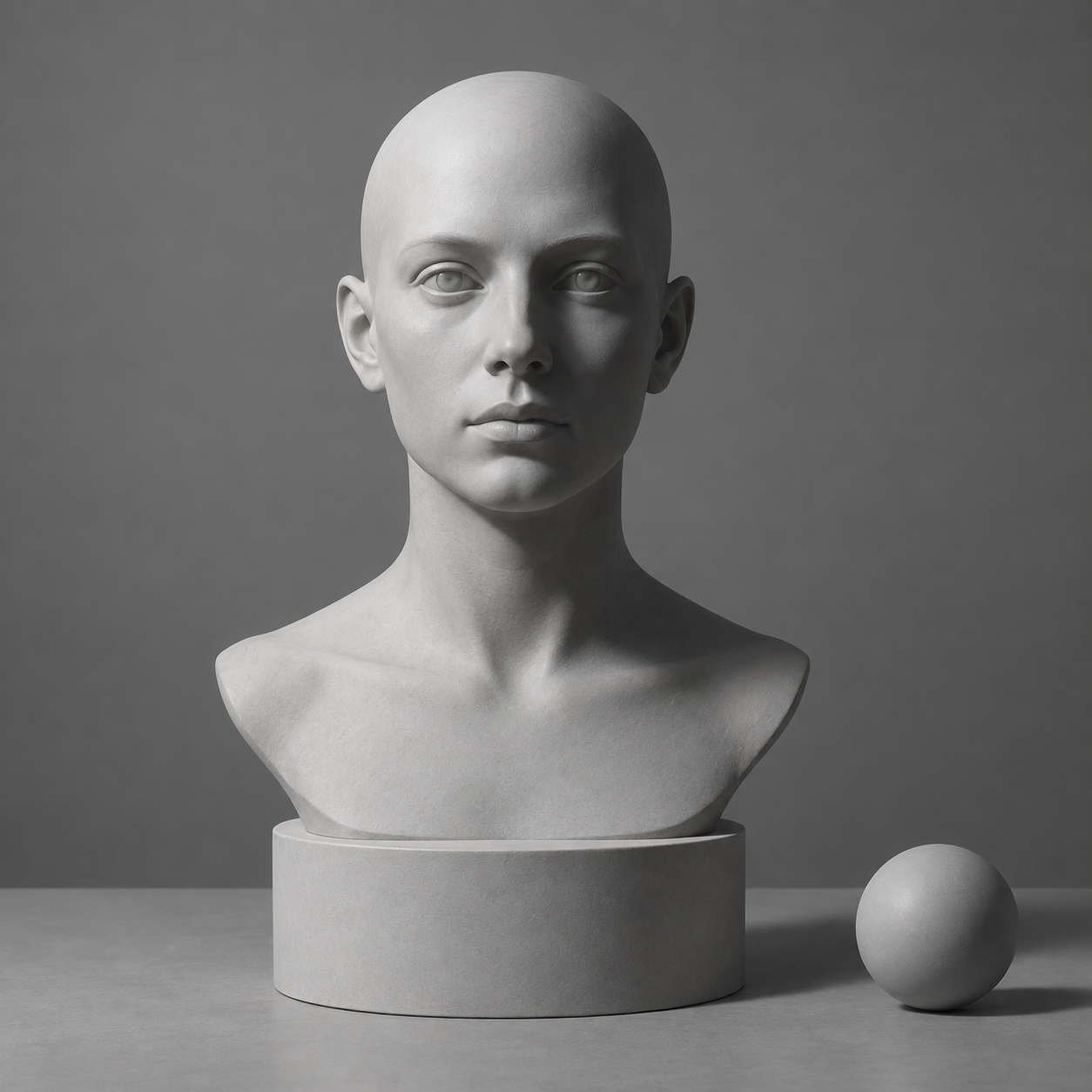
Story & characters
Form, format, and genre
These terms answer different questions: what kind of work is this, how is it made, how is it released, what conventions does it use, and what attitude does it take? The categories are editable working distinctions, not a universal classification system. The BFI's own discussion of cataloguing genres describes the difficulty of imposing clean boundaries on overlapping practices. BFI: Genres—where to draw the line?
Premise, theme, and meaning
A story's situation, its pitch, the question organizing its action, and the ideas it explores are related but different objects. This chapter gives them separate working definitions so that changing a logline does not accidentally replace a theme, and choosing a theme does not substitute for designing events.
Story patterns and dramatic engines
A story pattern describes a recognizable kind of action or change. A dramatic engine is the arrangement that keeps generating consequential problems and choices. A rescue can begin as an investigation, become a pursuit, and force an internal conflict without needing a single exclusive category.
Narrative structure and time
Structure describes relationships among parts: how events develop, how information is arranged, where attention shifts, and what changes as a result. Time adds a second distinction: when events occur in the story world versus when and for how long the work presents them.
Television storytelling
Television stories operate on several scales at once. An episode can solve an immediate problem, change a relationship, and complicate a season-long question. A series needs a reason to continue, while each installment needs a reason to exist in its particular form.
Character roles
A role describes what a character does in relation to a particular story or strand. It does not determine personality, moral worth, screen time, or casting credit. One person can be a protagonist in one strand, an antagonist in another, and a confidant within a third relationship.
Character archetypes and construction
Archetypes offer recognizable patterns of motivation or behavior. Character construction gives a particular person specific desires, habits, contradictions, circumstances, and choices. Use the pattern to ask better questions, then preserve the details that make the person exceed it.
Character arcs and relationships
A character arc tracks meaningful continuity or change across a chosen span. A relationship arc tracks how people relate to one another: what they know, expect, permit, withhold, and do together. Neither requires a smooth progression or a permanently positive outcome.
World, scenes & performance
World and setting
Worldbuilding describes the conditions under which a story operates. Setting specifies the place and time of an event. Design enough of the world to explain choices, limits, and visible details; a complete fictional encyclopedia is not a prerequisite for a compelling scene.
Scenes and sequences
A scene can be described along several independent dimensions: what happens, what changes, who wants what, what the audience learns, and where the event sits in a larger sequence. Select several labels when useful. A meal can be a negotiation, an introduction, and the start of a betrayal.
Perspective and audience experience
Perspective concerns access: whose experiences shape the presentation, what information is available, and when it becomes available. Audience experience concerns intended or observed responses. These are connected, but choosing a technique cannot guarantee a feeling.
Dialogue, performance, and blocking
Performance turns written possibilities into observable behavior. This chapter separates what is said, how it is delivered, where bodies move, and what a character is trying to accomplish. None of these labels is a score for acting quality. A restrained performance can be intensely active; a silent person can control a scene.
Production design and character appearance
Production design and appearance make story circumstances visible through spaces, objects, clothing, bodies, and surfaces. This chapter groups related creative decisions without implying that one department owns all of them. Costume, hair, makeup, props, set decoration, construction, and cinematography collaborate, with responsibilities varying by production.
Image, sound & construction
Shot size, angle, and composition
A shot can be described along several compatible dimensions: how large its subject appears, where the camera looks from, how subjects are arranged, what the shot does, and how the frame organizes attention. “Low-angle medium close-up reaction shot” combines these dimensions rather than naming competing shot types.
Camera movement and support
Describe camera movement through three separate decisions: where the camera travels, how it rotates or aims, and what supports it. Then describe timing and purpose. A lateral tracking shot might use a dolly, a handheld camera, a gimbal, or a vehicle mount; the path does not determine the support.
Lens, focus, and image capture
Lens and capture choices work as a system. A focal length needs the active sensor or film area to describe field of view. A depth-of-field claim needs aperture, focus distance, framing conditions, and an acceptable-sharpness criterion. A frame rate needs a stated capture or playback role. Keep these dependencies visible instead of treating a number as a complete visual instruction.
Lighting and color
Lighting describes how illumination reaches people, objects, and spaces. Color describes relationships among their recorded and displayed appearances. Keep the scene's light, camera exposure and white balance, and final grade separately editable: changing one does not produce every effect of changing another.
Editing, transitions, and pace
Editing organizes what viewers see and hear, when they receive information, and how separate moments appear related. A transition describes the join between images; an editing pattern describes relationships across several shots; pace describes the developing experience. These are connected decisions, but none can substitute for the others.
Sound, voice, and music
Sound supplies information about bodies, spaces, events, and ideas, including things outside the image. Describe a sound through separate questions: what produces it in the story, how it was made for the production, whose listening experience it represents, and how it behaves in the final mix.
Animation, effects, and mixed techniques
Animation constructs motion through successive states. Effects construct or modify events and images using physical, digital, or combined methods. A technique describes how material is made; the visual result describes how it behaves and belongs with the other elements. Neither a digital technique nor a physical one guarantees realism.
Documentary and nonfiction approaches
Nonfiction filmmaking combines records, encounters, accounts, and interpretations of the shared world. Its images and sounds still result from choices about access, framing, recording, selection, and presentation. Describing those choices makes a work's evidence and point of view easier to examine.
References and creative constraints
A useful creative reference identifies a source, the exact part worth studying, the dimension it informs, and the intended adaptation. “Use the restrained camera movement during the entrance” is more actionable than “make it like this film.” One source can inform movement while another informs materials or sound.